









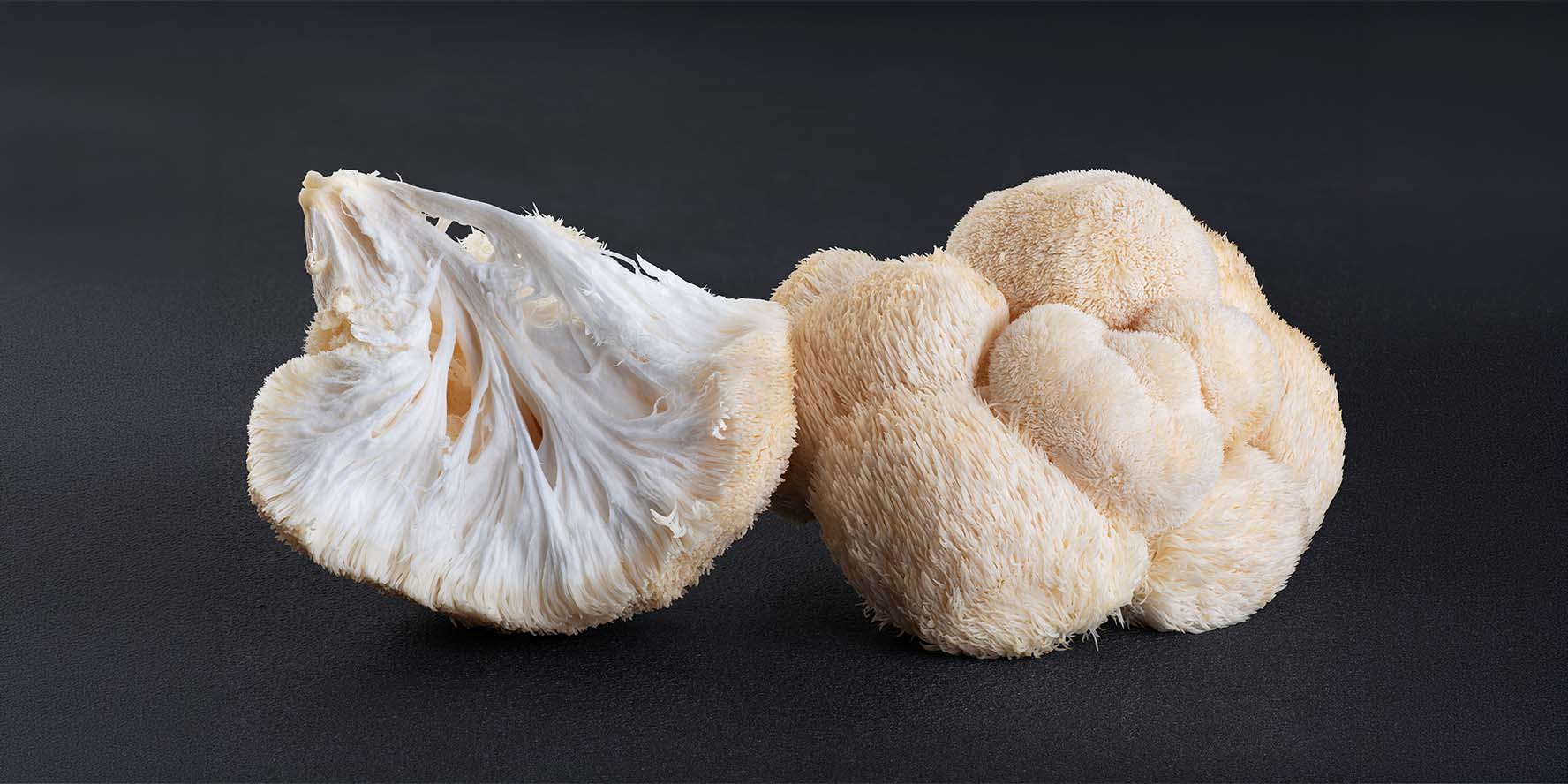
Why MycoThrive™ Lion’s Mane gives supplement brands a more credible path to cognitive health innovation
Lion’s Mane has quickly become one of the most recognizable mushrooms in the cognitive health category. Consumers are looking for focus, memory support, mental clarity, and mood-forward wellness solutions that consumers can build into a daily routine. For supplement manufacturers, that creates a meaningful opportunity. But it also creates a challenge: Not every Lion’s Mane ingredient is built the same.
In today’s crowded mushroom market, many products are sold primarily on species name alone. The label may say “Contains Lion’s Mane,” but that does not always tell a formulator enough about the ingredient’s source, chemistry, extraction method, composition, or functional relevance. That is where MycoThrive™ Lion’s Mane from Applied Food Sciences helps raise the standard.
The Category Needs Better Characterization
For supplement manufacturers evaluating Lion’s Mane ingredients, three quality questions matter most: Is it defined by more than the species name? Is it characterized beyond beta-glucans? And does the biomass source match the product story?
- Lion’s Mane should not be evaluated by name alone.
To create a supplement consumers can trust, manufacturers need to understand what is actually in the ingredient. While Lion’s Mane is certainly a buzz-worthy ingredient to have on pack, the name alone does not guarantee that a product will deliver meaningful cognitive support.
Recent research reinforces this point, as many products on the market today cannot validate the presence of secondary compounds of interest and lack the clinical evidence to support claims for cognitive performance. For manufacturers, the takeaway is that ingredient selection, extract quality, dosage, and clinical validation all matter. This is where MycoThrive™ Lion’s Mane helps raise the standard.
- Beta-glucans do not tell the full Lion’s Mane story.
Beta-glucans are important. They are foundational fungal polysaccharides with meaningful immune-related value. MycoThrive™ Lion’s Mane is standardized to beta 1,3/1,6 glucans at greater than 20%. However, there are secondary compounds of interest that are more relevant to understanding the mushroom’s unique cognitive and neurotrophic positioning.
That is why MycoThrive™ Lion’s Mane is also further characterized by validated, measurable levels of hericenones and ergosterol. These secondary marker compounds are not currently standardized as formal specification targets, but they are monitored to strengthen ingredient characterization, biomass integrity, and analytical credibility. That distinction is important. The goal is not to overclaim standardization. The goal is to raise the quality conversation beyond a single marker and toward a more complete understanding of Lion’s Mane chemistry.
The next standard in Lion’s Mane will not be built on species name alone. It will be built on source, chemistry, validation, and human outcomes.
- Fruiting body and mycelium are not interchangeable.
MycoThrive™ Lion’s Mane is made from 100% fruiting bodies. This is important because fruiting body and mycelium are chemically distinct and should not be treated interchangeably.
Fruiting bodies are typically richer in hericenones and hericenes, while erinacines are more commonly associated with mycelium. For brands building around cognitive health, that distinction is important. For MycoThrive™ Lion’s Mane, we have strong clinical evidence that helps connect the ingredient’s composition to the intended effect.
Quality Control Brands Can Build On
For supplement manufacturers, quality control is not just a technical concern. It is a brand trust concern. AFS recently published a validated UHPLC-UV method for the simultaneous quantification of key Lion’s Mane marker compounds, including hericenones, hericenes, erinacine A, and ergosterol.
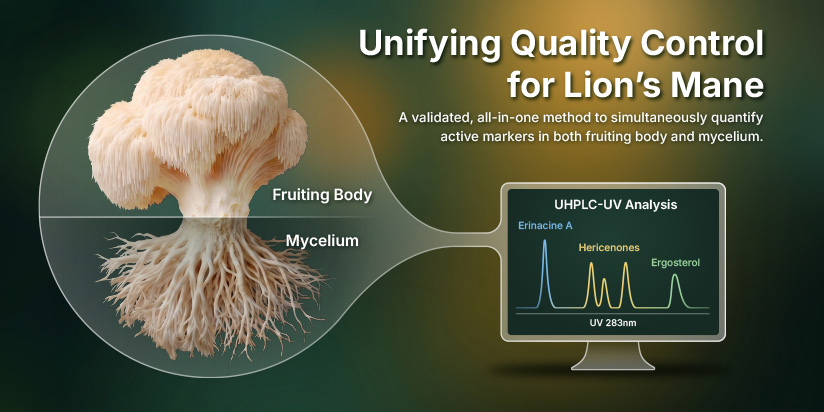
This method was developed to support better characterization across fruiting body raw materials, mycelium raw materials, and finished products. For manufacturers, that creates a more practical path toward:
- Stronger ingredient identity
- Improved batch-to-batch comparability
- Better quality control conversations
- More meaningful differentiation in the mushroom category
- A closer connection between label story and ingredient composition
Clinical Support for Cognitive Health Positioning
MycoThrive™ Lion’s Mane also brings human clinical research to the formulation conversation. In an acute double-blind, randomized, placebo-controlled crossover study in 40 healthy adults, MycoThrive™ Lion’s Mane demonstrated cognitive and emotional wellness benefits after a single 1000 mg dose, with effects observed as early as 60 minutes post-ingestion. Participants experienced improvements related to mental processing speed, memory retention, reaction time, attention, happiness, and contentment (read more).
That is significant because Lion’s Mane has often been positioned as a long-term cognitive support ingredient. MycoThrive™ Lion’s Mane helps expand that story by showing benefits that may be noticed within hours. But the story does not stop at acute performance.
In a 45-day double-blind, randomized, placebo-controlled chronic study, participants using MycoThrive™ Lion’s Mane reported a 16.9% increase in memory, a 16.1% increase in focus, and a 10.9% increase in mental clarity after continued use.
Together, these findings give supplement manufacturers a more complete cognitive health platform: fast-acting support for focus and mental performance, plus a daily-use story around memory, focus, clarity, and emotional wellness that can support daily ritual use over time.
New Insights: Lion’s Mane & the Gut-Brain Axis
The chronic study also opens the door to one of the most relevant conversations in supplements today: the gut-brain axis. MycoThrive™ Lion’s Mane was associated with a significant increase in Faecalibacterium prausnitzii, a keystone gut species involved in butyrate production. That matters because butyrate is more than a digestive health metabolite. It is a postbiotic signaling molecule that helps connect the gut environment to the other body systems involved in focus, mood, and emotional well-being.
For supplement brands, this creates a more differentiated Lion’s Mane story. Rather than positioning the ingredient only around mushroom actives or beta-glucans, MycoThrive™ Lion’s Mane can support a broader narrative around cognitive performance, emotional wellness, and microbiome-mediated support.
That is especially valuable as consumers become more familiar with the idea that brain health does not start and stop in the brain. The gut-brain axis gives brands a compelling way to explain how daily cognitive support may be influenced by multiple biological pathways, including the microbiome.
A Stronger Solution for Supplement Innovation
For supplement brands, MycoThrive™ Lion’s Mane offers more than a trending mushroom name. It provides a stronger platform for cognitive health innovation built around:
- 100% fruiting body integrity
- Organic sourcing
- Standardized beta-glucans with measurable secondary marker compounds
- Advanced ultrasonic-hydro extraction
- Published analytical method validation
- Human clinical research
- USDA Organic, Non-GMO Project Verified, GRAS, and Kosher credentials
The opportunity in Lion’s Mane is no longer just about adding a popular mushroom to a supplement facts panel. The next generation of mushroom products will need to prove why their ingredient is different, how it is measured, and how it supports the product’s functional promise. MycoThrive™ Lion’s Mane gives supplement manufacturers a better way to do that. It helps raise the standard for what Lion’s Mane can be: more characterized, more credible, and better aligned with the cognitive health products consumers are looking for.